How to Keep Your Log Home Business Moving All Winter
When exterior work winds down and the temperatures drop, it’s tempting to think of winter as the season you just have to get through. But for smart log home professionals, the slower months can be some of the most productive of the year. Check out these tips to help keep your business moving and your bottom line strong all year long.
Sure, you might not be blasting, staining, or chinking exteriors in January. But that doesn’t mean the phone has to stop ringing, your social media has to go quiet, or your business has to sit on the sidelines until spring.
In fact, winter work offers three powerful opportunities for contractors to keep business moving forward, build a stronger pipeline, and improve profitability before the busy season returns.
- Stay visible and connected with potential customers.
- Interior work.
- Investing some time in building a stronger business.
Here’s how to make the most of it.
Keep Your Name Out There (Even When You’re Off the Jobsite)
Just because you’re not starting new exterior projects doesn’t mean you should disappear from your customers’ feeds.
Social media is one of the best ways to stay top of mind during the off-season. Homeowners are still thinking about their log homes, researching maintenance, looking at projects, and planning improvements for the coming year. When they’re ready to hire, you want your business to be the one they remember.
And you don’t need a new project every week to have something worth sharing. Your experience, past projects, tools, knowledge, and even the occasional jobsite story can provide plenty of content.
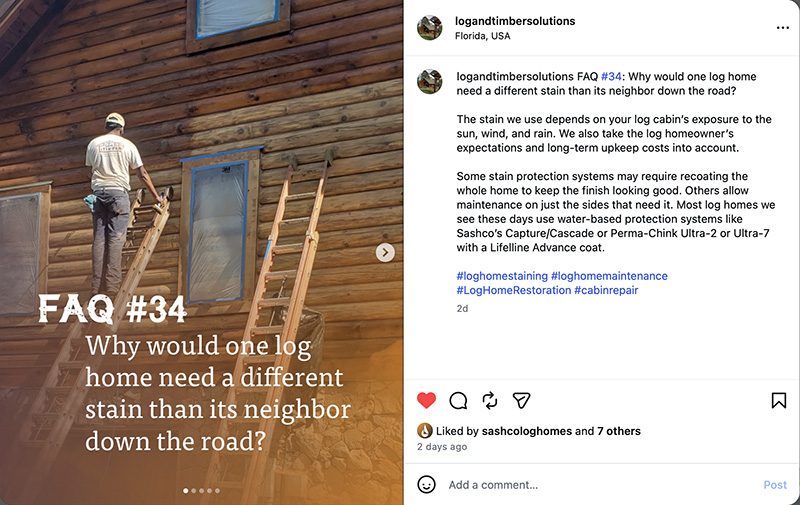
Here are 20 ideas to keep your social media moving this winter:
1. Bring Back the Before & After. Dig through your project photos and share some of your best transformations. Show where the project started, what it took to get there, and the finished result.
2. Play What’s Wrong With This Picture? Share a photo of a log home maintenance issue and challenge followers to spot the problem. Give them the answer and a little education in the comments.
3. Give a Toolbox Tour. Feature a tool you use regularly. Explain what it does, why you like it, and why it earns a permanent spot in your setup.
4. Tell the Story Behind a Project. Pick a memorable job and walk followers through it. What was the challenge? What did you discover? How did you approach the solution?
5. Bust a Log Home Myth. Does chinking last forever? Can you stain over failing stain? Does every check need to be filled? Share your professional perspective and set the record straight.
6. Show the Work Behind the Work. Customers don’t always see the preparation, masking, sanding, blasting, repairs, and other details that go into a quality finish. Give them a look at what professional craftsmanship really involves.
7. Share a Winter Homeowner Tip. What should homeowners be looking for inside their log homes during the colder months? Share a few things they can inspect or keep an eye on.
8. Introduce Your Crew. Put faces to the names. Feature your employees, share a little about their experience, and let customers get to know the people behind the work.
9. Share a Project You’re Especially Proud Of. Not every great project is about the biggest transformation. Sometimes it’s the tricky repair, unusual challenge, or attention to detail that makes a job memorable.
10. Answer a Question You Hear All the Time. What’s one question homeowners ask you on nearly every estimate? Turn your answer into a short video, graphic, or educational post.
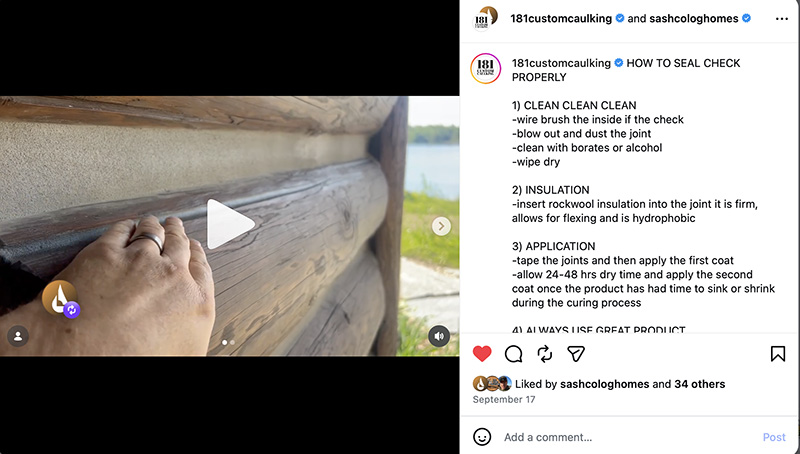
11. Spotlight a Product You Trust. Show a product you regularly use and explain where it fits into your process. Share your experience, application tips, or why you choose it for a particular job.
12. Share a Cautionary Tale. Show what can happen when maintenance gets overlooked. Explain what went wrong, what could have prevented it, and what homeowners can learn from the situation.
13. Take Followers Along for a Day in Your Life. Share the less glamorous, behind-the-scenes parts of running a log home business. Equipment, estimating, material runs, crew meetings, and everything in between.
14. Zoom In on the Details. Share a close-up of a beautiful finish, repair, joint, or other detail that might otherwise go unnoticed. Explain what makes it good work.
15. Let Your Customers Do the Talking. Share a review, testimonial, or customer thank-you. If you have permission, pair it with a photo of the finished project.
16. Start an Industry Conversation. Post a challenging project photo and ask other professionals how they’d approach it. Invite some friendly debate and get people talking.
17. Take a Trip Down Memory Lane. Pull out an older project and share a throwback. Your past work is still proof of your experience, and those older photos might be some of your best content.
18. Share Your Professional Opinion. What’s one thing you wish every log home owner knew before hiring someone to work on their home? Give them the benefit of your experience.
19. Start Filling Your Spring Calendar. Remind homeowners that exterior project schedules fill up. Encourage them to start conversations, request estimates, and get on your schedule before the spring rush.
20. Show How You Keep Getting Better. Share a recent training, certification, industry event, or new skill you’ve picked up. Customers want to know they’re hiring someone who takes their craft seriously.
One more thing! Don’t just post and walk away. Respond to comments, interact with other industry professionals, share partner content, and tag manufacturers and suppliers when appropriate. Social media is about building relationships, not just filling a feed.
And when you’re sharing your Sashco projects, tag @sashcologhomes. We love seeing your work and sharing it with our community.
Bring the Work Inside: Winter Is a Great Time for Interior Projects
Exterior season may be on pause, but log homes don’t stop needing attention just because it’s cold outside.
Winter can be an excellent opportunity to shift the conversation toward interior maintenance, restoration, and finishing projects. Homeowners are spending more time indoors, noticing things they may have overlooked during the warmer months, and thinking about improvements they’d like to make.
Depending on your services, there may be plenty of opportunities for interior work, including:
- Interior log cleaning, preparation, and refinishing.
- Interior staining and clear coating.
- Interior chinking and caulking where appropriate.
- Repairing checks, cracks, and damaged wood.
- Refinishing exposed beams, posts, and wood ceilings.
- Restoring interior woodwork, trim, and architectural details.
- Fireplace surrounds and other specialty wood features.
- Interior inspections and maintenance assessments.
Don’t overlook your existing customer list, either. Reach out to homeowners you’ve worked with in the past. Is there interior work they were considering? Have they noticed anything that needs attention? Could they use an inspection or maintenance assessment?
A simple follow-up can open the door to a project that might not have happened otherwise.
Winter is also a good time to start conversations about next year’s exterior projects. Homeowners who plan ahead have more time to budget, make decisions, and get on your schedule before everyone else starts calling in the spring.
Step Back and Work ON the Business, Not Just IN It
Here’s something every busy contractor knows, when you’re running jobs, managing crews, answering customer calls, ordering materials, and putting out the occasional fire, it’s easy to let the business side of your business take a back seat.
The slower season gives you a chance to catch your breath and take a good look at what you’re building.
Are your prices keeping up with your costs? Are your estimates profitable? Is your website showing the quality of work you’re capable of? Are you following up with potential customers? Are your processes making your life easier, or creating more work than necessary?
Use some of that winter downtime to:
- Review your numbers. Look at revenue, expenses, profit margins, and which types of projects are actually making you money.
- Revisit your pricing. Make sure your estimates account for labor, materials, overhead, experience, and the true cost of doing business.
- Update your website and portfolio. Add recent projects, quality photos, customer testimonials, and clear descriptions of your services.
- Reconnect with your network. Reach out to manufacturers, builders, suppliers, real estate professionals, and other contractors who can help generate referrals.
- Build a better follow-up system. Revisit old estimates, reconnect with previous customers, and organize your leads for the coming season.
- Invest in your crew. Review training, safety practices, equipment, and the processes that help your team do better work.
- Plan your next season. Get ahead on scheduling, equipment maintenance, marketing, and business goals.
Make This Winter Count with Zero Failures
Being great at the work is important. But understanding the science behind the work, knowing how to diagnose problems, choosing the right products, and building a business that can sustain your success are what help set a professional apart.
That’s where Sashco’s Zero Failures training comes in.
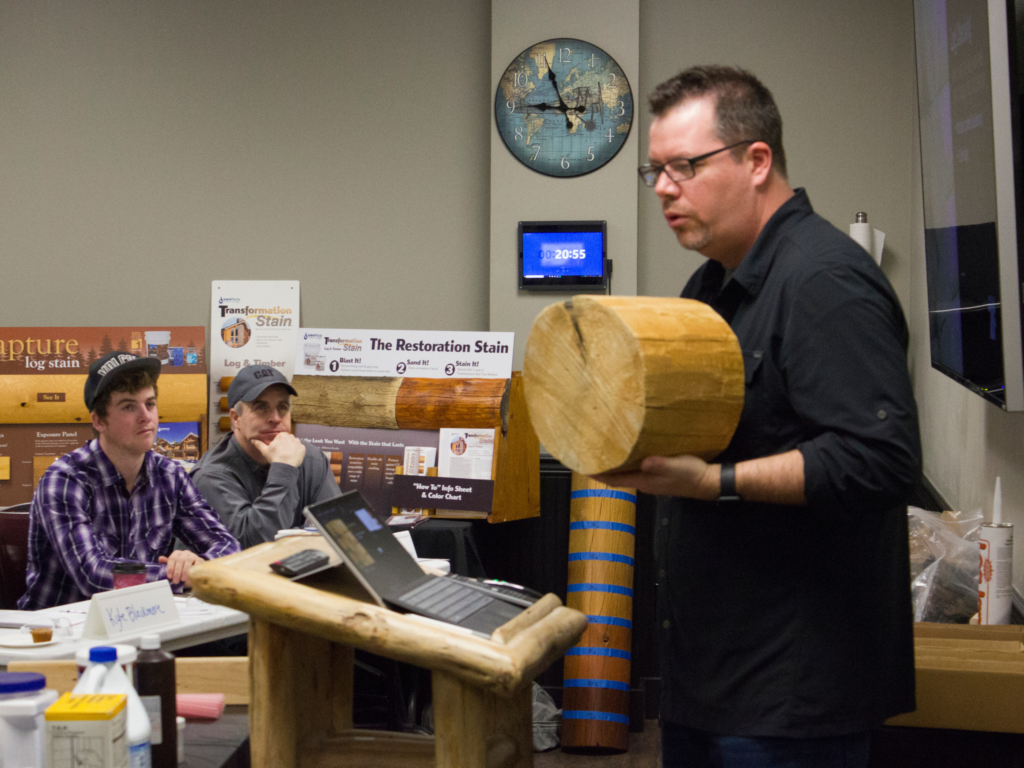
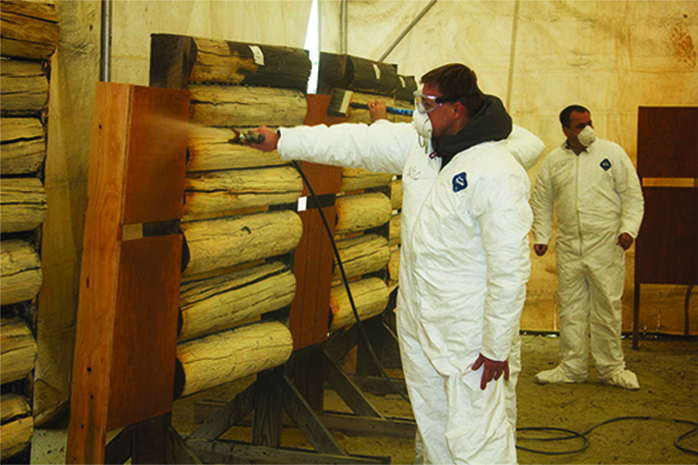

Zero Failures combines wood science with business focus, giving professionals an opportunity to sharpen their technical knowledge, learn more about product performance, connect with other pros, and take a fresh look at how they approach their businesses.
It’s a chance to step away from the daily demands of the jobsite and invest in something that pays dividends long after winter is over.
Because the best time to get better at what you do isn’t when you’re already buried in spring projects. It’s when you have the time to learn, plan, and put those lessons to work.
Don’t just wait for spring. Get ready for it.
The exterior work may be slowing down, but your business doesn’t have to. Stay visible, find opportunities indoors, strengthen your customer relationships, and invest in your next season.
When the weather breaks and the calls start coming in, you’ll be glad you did.

Ready to stain? Don’t guess! Sample. Testing stain colors on your actual logs before committing ensures that you get the exact look you want and helps prevent “oops” moments later. Snag your free samples here.