How to Protect Your Log Home from Pests.
Heads up, homeowners! Don’t let summer bugs move into your log home.
Summer isn’t over yet, and neither are the bugs. Before the season winds down, take a few minutes to walk around your log home to see what’s going on. You’re just looking for the little things that can give wood-loving pests an opportunity to move in. A new crack in a log. A soft spot. Wood that stays damp. A little pile of sawdust that definitely wasn’t there last time you looked. Those things are worth paying attention to.

Start with a quick walk-around.
You don’t need to turn into a pest inspector. Just make a lap around the house and keep your eyes open.
Look for:
- New cracks or openings in the logs.
- Soft, damaged, or deteriorating wood.
- Areas where moisture collects or wood stays wet.
- Sawdust or frass around logs, windows, doors, or other wood components.
- Visible insect activity.
- Places where soil, mulch, firewood, or other materials are right up against the house.
Why all the attention to moisture and damaged wood? Because pests are opportunists. When wood gets wet, damaged, or compromised, it can become much easier for insects to find a way in. And on a log home, catching a small problem early is a whole lot easier than dealing with a big one later.
Got ants? Think beyond the ones you can see.
If carpenter ants have already decided your log home looks like a pretty good place to hang out, baiting can be one way to target the colony rather than simply killing the ants you happen to see.
One DIY bait recipe often used for ants combines:
- ½ cup sugar
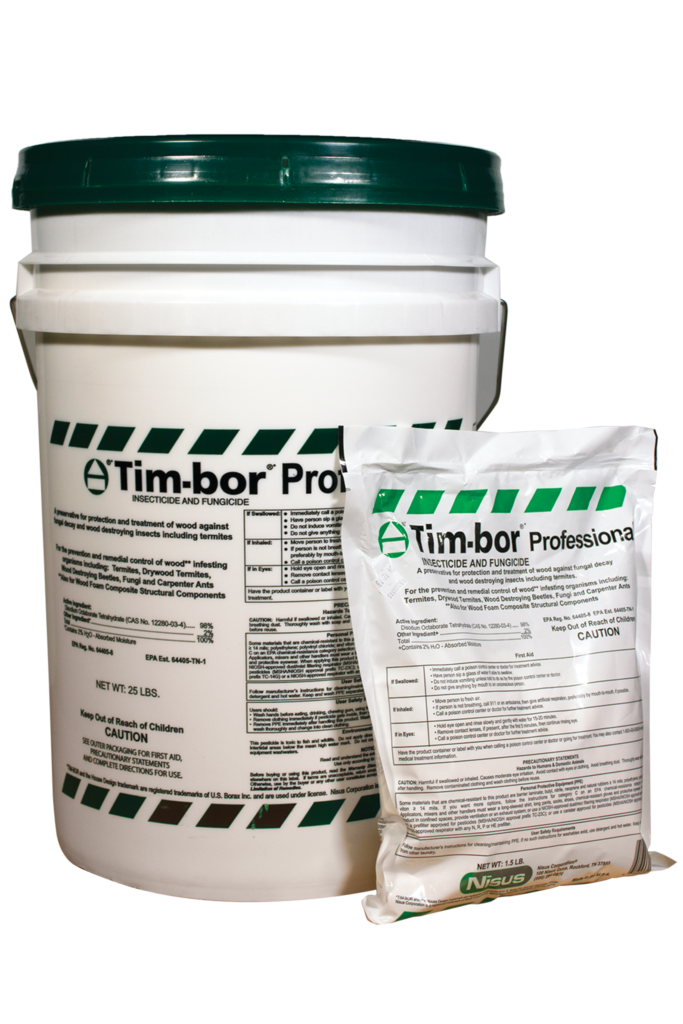
- 1½ tablespoons borax (or Borates)
- 1½ cups warm water
Mix it together, soak cotton balls in the solution, and place them near areas where you’re seeing ant activity.
The idea behind baiting is pretty simple: worker ants take the bait back to the colony and share it. So instead of only dealing with the workers you can see, you’re attempting to get the bait into the colony itself.
Important: Keep homemade baits away from children and pets, and follow the label and safety directions for any pest-control product you use.
A job-site trick for termite activity.
Here’s another trick that’s been shared from the job site for dealing with termite activity.
Take scraps of untreated wood. Yep, the kind you might already have sitting around a job site or lumber pile and soak them in a 5-gallon bucket containing:
- 2 cups borax (or Borates)
- 1 gallon warm or hot water
Let the wood soak in the hot sun for a week or two. The idea is then to use those treated pieces around the wood pile, along the edges of the house, or in areas where termite activity has been observed.
However, termites are a different animal than ants, and visible termite activity around a log home deserves serious attention. Homemade treatments shouldn’t be considered a substitute for professional identification and treatment when termites are suspected.
Remember, the bugs you see aren’t necessarily the whole problem.
This is one of the most important things to understand about ants and other social insects. The insects you see moving around are often workers. They’re out looking for food and bringing resources back to the colony.
That’s why baiting works differently than simply spraying or killing the insects you see. The goal is to get the bait into the colony rather than just knocking out a few workers.
So if you spot a few ants marching across your logs, don’t automatically assume you’ve solved the problem because the ants disappeared.
Ask yourself: Where are they coming from? Why are they here? And what are they finding that they like?
Five minutes now can save you a much bigger headache later.
Log home maintenance is a lot about catching small things before they become big things. The same goes for pests.
Take a walk. Look closely at the logs. Pay attention to moisture. Check around wood piles and the perimeter of the house. If something looks different from the last time you checked, don’t ignore it.
And if you find evidence of termites, significant wood damage, or an infestation you can’t identify, bring in a qualified professional. Getting the problem correctly identified is the first step toward dealing with it.
Your log home has enough things to worry about. You don’t need a colony of uninvited guests adding to the list.
Share this:

Ready to stain? Don’t guess! Sample. Testing stain colors on your actual logs before committing ensures that you get the exact look you want and helps prevent “oops” moments later. Snag your free samples here.
About Sashco Log Home Products
When it comes to protecting and beautifying your log home, Sashco isn’t just another stain on the market — it’s the high-performance choice for serious log lovers. With industry-leading products like Capture, Cascade, and Transformation, Sashco combines cutting-edge technology and rugged durability to keep your logs looking stunning and standing strong year after year. Whether you’re chasing that perfect finish or just want to avoid the heartbreak of costly repairs, Sashco’s got your back. Because your log home deserves more than “good enough,” it deserves Sashco. Made for logs. Made to last. Made to make your neighbors jealous.