How to Prevent Rot on Log Railings.
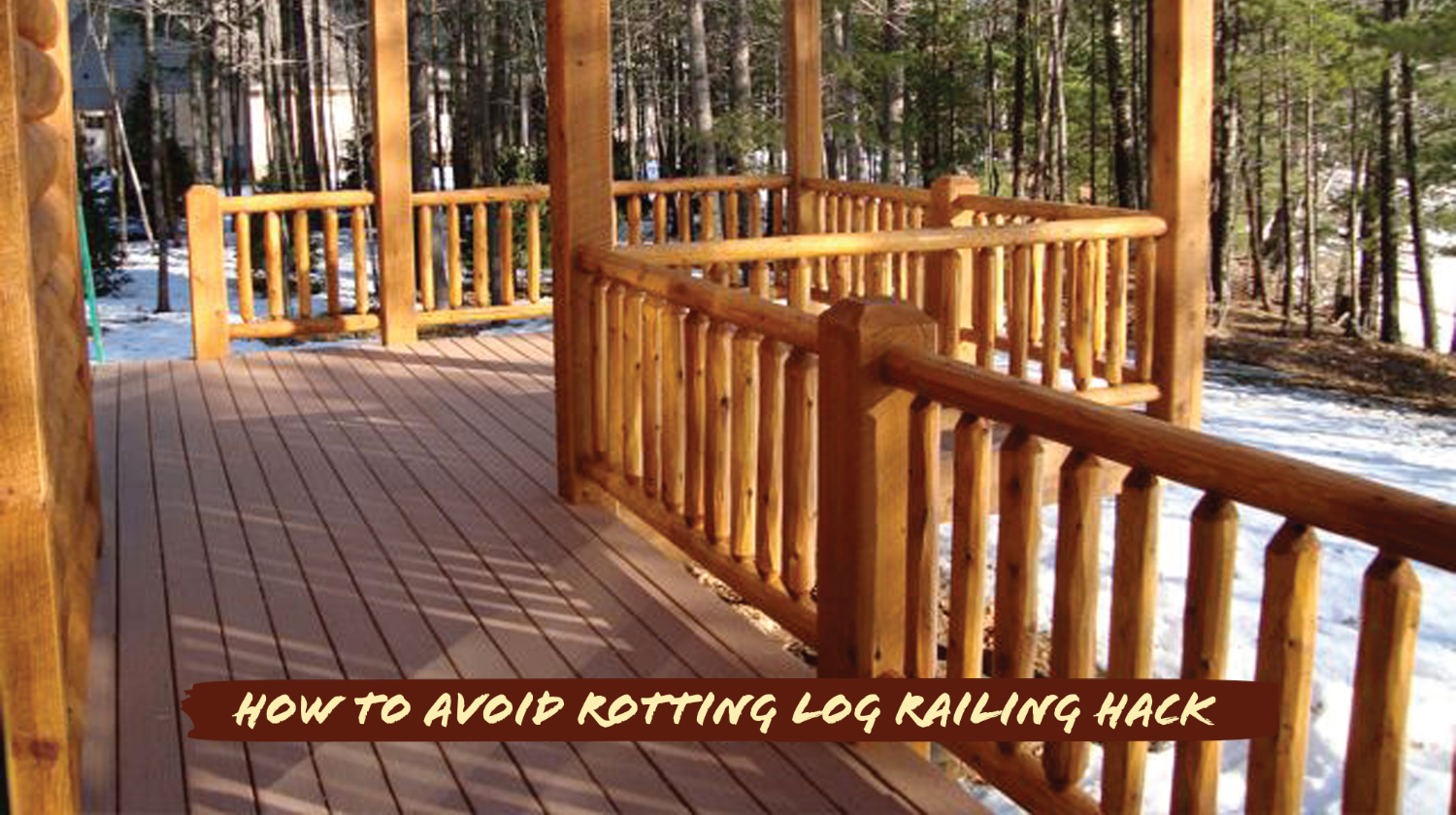
Outdoor handrails and spindles take a serious beating from the weather. Especially when they aren’t protected by an overhang, they need more frequent care than other parts of a log home.
And there’s one simple thing you can do to help prevent one of the biggest problems they face: give trapped water a way out.
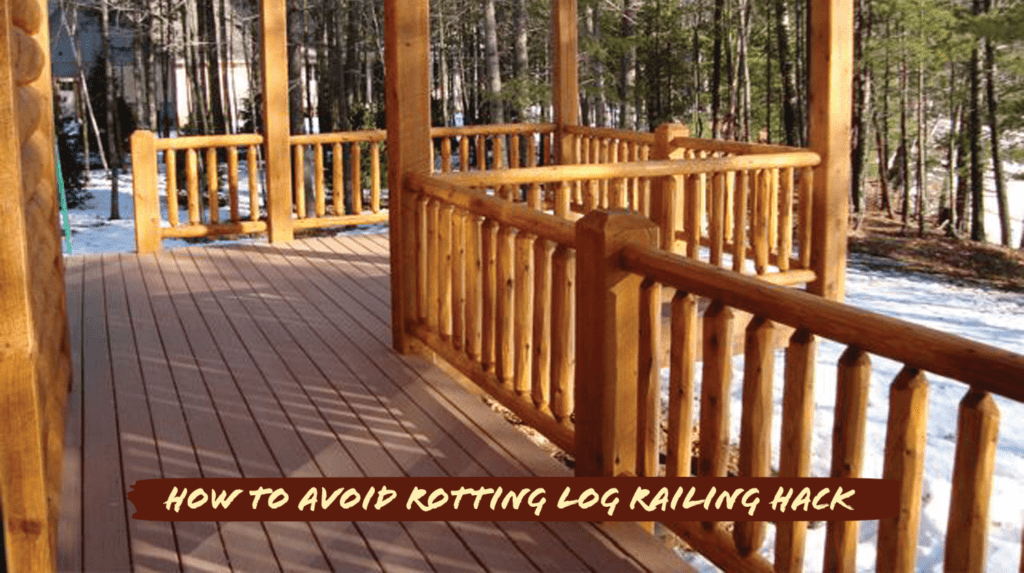
Why log railings are so vulnerable
Typical log spindles and handrails often have holes and connections that don’t drain properly. Rain and melting snow can collect in these areas and sit for days, weeks, or even months.
That trapped moisture creates conditions where rot and decay can develop.
The quick fix: drill weep holes
This is the simple railing hack:
- Grab a 1/8-inch drill bit.
- Drill a weep hole wherever a spindle meets the rail.
- Do this on both the top and bottom rails.
- Look for cracks in the top curve of the railing, too.
- At the bottom end of any crack that could collect water, drill another weep hole.
The goal is simple: give water an escape route instead of letting it sit in the wood.
New handrails have their own set of challenges
Round log handrails are typically made from green wood. Once they’re installed and begin to dry, the wood shrinks, cracks, and develops fissures as it releases the stresses caused by shrinkage.
Those cracks and fissures are a normal part of the drying process and can’t be prevented.
The problem is what happens if a finish is applied before those openings develop. Once cracks form, they can provide a path for water to get behind the finish and into the railing.
Temperature changes can make the problem worse. When the rail heats up in the sun, water in the wood can turn into water vapor and put pressure on the finish. During winter, water in the wood can freeze and expand, which can also push the finish away from the surface.
Green wood also makes finishing more difficult because finishes have trouble adhering to damp surfaces.
Give new handrails time to dry
If possible, wait until a new handrail reaches a moisture content of less than 20% before finishing it.
How long that takes depends on how green the wood is and the diameter of the rail. It can take two to six months.
By that point, most of the cracks and fissures will have opened, and remaining cambium on the surface will have had time to dry and peel away.
What is cambium?
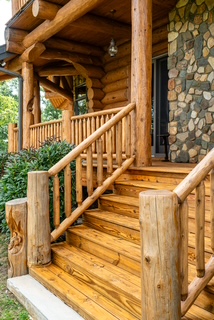
New handrails are often very smooth because they’re typically hand-peeled. Some can still have cambium residue left on the surface. Finishes have difficulty adhering to cambium. Even if a finish initially adheres, the cambium can eventually dry and peel away, taking the finish with it. Trying to sand damp cambium away can also be difficult because the damp wood fibers and cambium can quickly clog sanding paper or sanding pads.
If you can’t wait for the handrail to dry
Not everyone wants to wait months before finishing a new handrail. If the handrail needs to be finished sooner, the surface should be prepared as well as possible. The other option is to allow the handrail to dry before finishing it. If the handrail has already developed some surface graying while drying, the surface can be lightly sanded with 60- to 80-grit sandpaper and washed before finishing. Whatever finishing system you’re using, make sure the finish gets into the cracks and fissures that have developed in the wood.
Don’t overlook the bottom of the railing
The bottom sockets of handrails can be particularly susceptible to water infiltration and the water staining that can follow. Providing a way for water to drain from the socket can help prevent water from collecting there. The same goes for other areas where water can become trapped. If there’s nowhere for it to go, moisture can sit against or inside the wood.
Watch for discoloration
Handrails can develop the same types of discoloration seen on logs, including:
- Mold
- Tannins
- Water stains
- Grayed wood
These conditions can be handled in the same general way as they are on logs: clean the surface, address the discoloration, and prepare the wood before applying the finish.
If sanding is necessary, use 60- to 80-grit sandpaper, then wash the sanded surface before applying the first coat of finish.
Handrails need more frequent maintenance
The top rail takes the most abuse from sun, wind, and rain, so don’t expect it to follow the exact same maintenance schedule as the rest of your log home.
Plan on checking your railings regularly and expect maintenance about every year or two.
During those inspections, look for:
- Open cracks and fissures
- Large checks or splits
- Water collecting in holes or sockets
- Water stains
- Mold
- Grayed wood
- Areas where the finish is no longer protecting the wood
Pay particular attention to larger checks. If a split or check becomes more than 1/4 inch wide, it should be sealed to help prevent large amounts of water from getting into the rail.
A little drainage goes a long way
The basic strategy for protecting a log railing is pretty simple: Keep water from sitting in the wood.
Drill weep holes where water can collect. Give the bottom of cracks a way to drain. Pay attention to sockets and other connections. Let new handrails dry when possible, and properly prepare the wood before finishing.
Your handrails are exposed to some of the harshest weather on the property. Give them a little extra attention, and you’ll have a much better chance of keeping water where it belongs: out of the wood.