Secrets From Montana Weekends to Cross-Country Craftsmanship
Two teenage brothers, a remote corner of Montana, and a cabin built just for fun. What started as a weekend project decades ago helped lay the foundation for a family business that would grow to build log homes across the country. Now, three generations later, the family is making sure the little cabin that started it all isn’t forgotten.
Some stories start with a business plan. Others start with two teenage brothers, a pile of logs, and an idea.
For Meadowlark Log Homes, it was the latter.
Today, Meadowlark is an established log home manufacturer based in Libby, Montana, but the roots of the company reach back to a much simpler time, when the family was living in a remote corner of northwest Montana and figuring things out as they went.
And surprisingly, the story of how it all began is still standing in the woods.
Two Brothers, One Cabin, and an Idea
The story of Mountain State Log Homes began long before the company officially existed.
Meadowlark’s story begins in the early-to-mid 1970s, when the family moved from an Amish community in Indiana to northwest Montana. They were among the first four families to establish a new Amish community in the area.
It was a very different way of life. The region was remote, and daily living was simple and often primitive. There was no electricity, indoor plumbing, or running water. The family made their living through hard work, and the grandfather operated a sawmill, milling railroad ties.
But it was two of his sons, Lloyd and Irvin, who unknowingly set something much bigger in motion.
At just 14 and 16 years old, the brothers decided they wanted to build something of their own in their spare time. They milled some logs with a flat profile and came up with their own version of a log cabin.
“They didn’t have any concept of what to do. They just had this idea in their mind and went and kind of invented their own version of a log cabin.”
The boys used small, roughly eight-inch lodgepole logs, left the bark on, and stacked the logs flat on top of one another. On weekends and during the summer, they built a rustic little cabin along a creek. It wasn’t intended to be a product, a business, or even anything particularly ambitious. It was simply a place to hang out and camp. But their grandfather saw something in what they were doing.
At the time, Montana already had plenty of traditional log home builders using full-scribe and chink-style construction methods. The family recognized that their flat-on-flat approach offered something different: a much faster, less labor-intensive way to build.
What started as an accidental invention turned into a pretty smart building concept. And just like that, a business idea was born.
The Difference Is in the Details
The family began building log cabins for customers in the surrounding area, with their first market centered around Eureka, Montana.
By the early 1980s, what had started as a small operation was becoming a full-time business. The grandfather and his sons worked together, building and pre-assembling homes before shipping them to customers.
As demand grew, so did their reach.
Through the 1980s and 1990s, Meadowlark expanded beyond Montana, developing dealers in Washington, Wisconsin, Indiana, South Carolina, and other states. Washington became a particularly strong market.
The business continued to grow, and in 1992, the family relocated about an hour and a half south to Libby, Montana, where they purchased property and established the operation that remains home to the business today.
What began with a couple of teenagers experimenting with logs beside a creek had grown into a company shipping log homes across the country. And the family connection never went away.
Today, the business is in its third generation, a pretty remarkable legacy for a project that was originally just something two brothers wanted to build on the weekends.
A Corner System Designed to Make a Difference
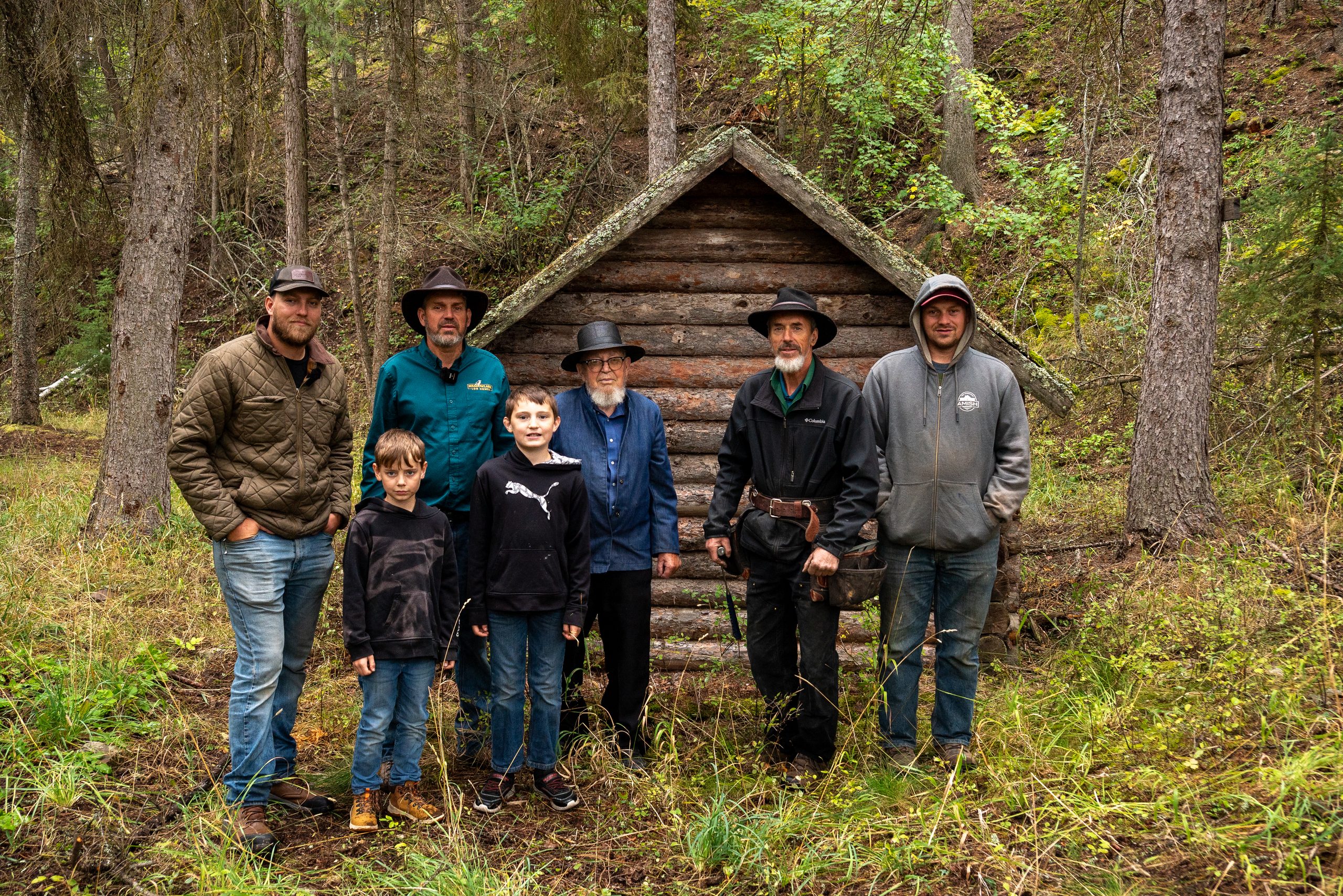
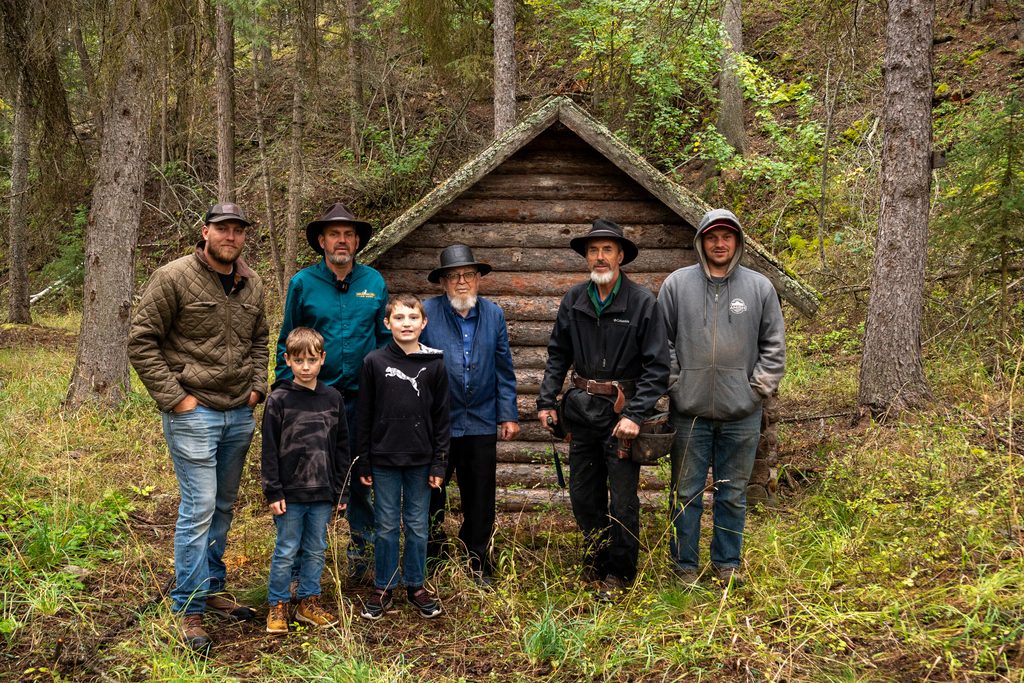
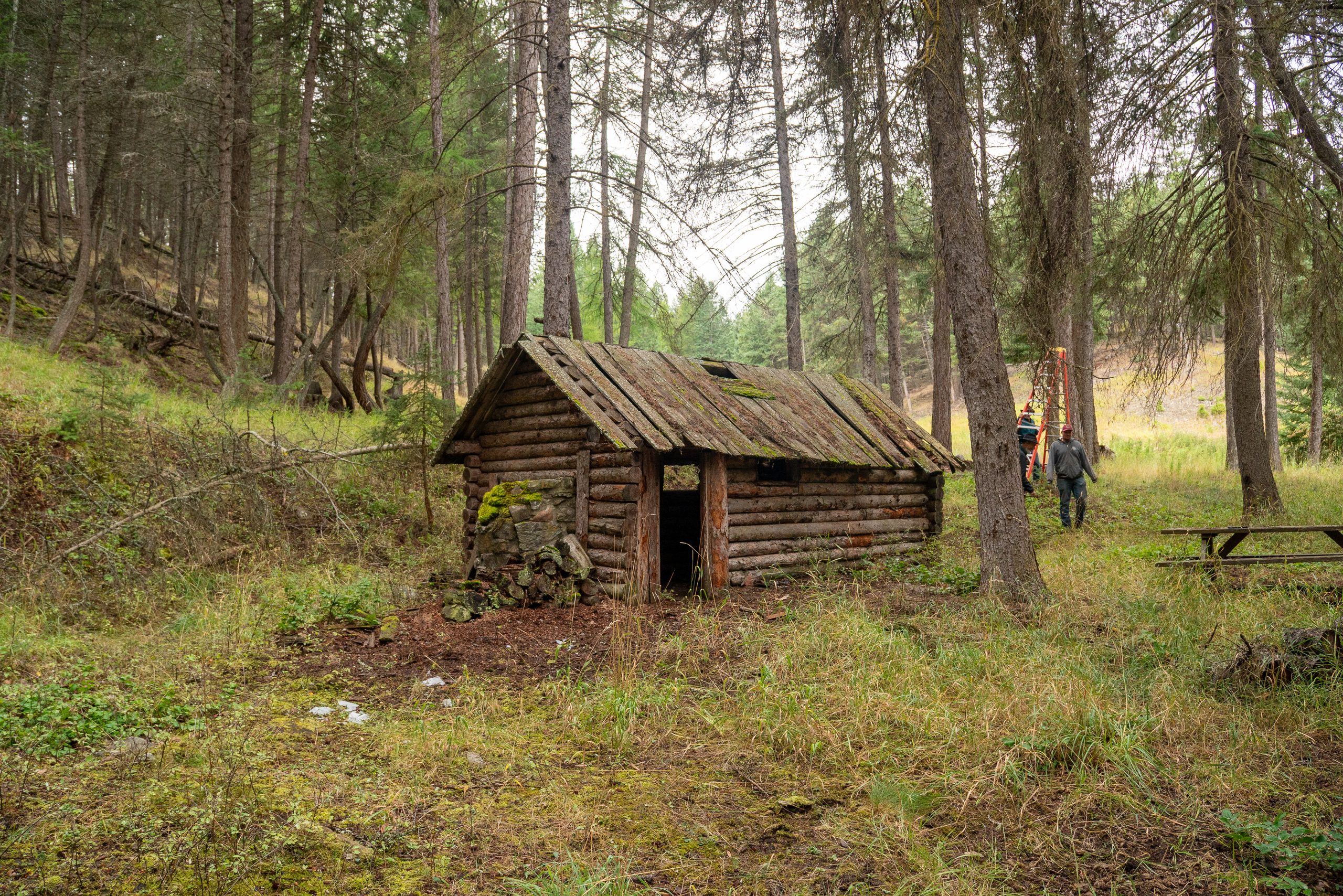
Here’s where the story gets even better. That original cabin? It’s still there. Tucked between two small hills along a creek, the little structure has remained on the property where the family once lived.
The surrounding land is largely untouched, and the cabin has been sitting there for decades, quietly holding onto its place in the family’s history.
Over the years, the family would occasionally return to visit it. They knew its story, and it was always there. But time takes its toll, even on the things we wish could last forever.
The cabin’s original roof was made of boards, and the structure had never been stained or finished. It had simply weathered naturally, developing the aged, rustic appearance you’d expect from a building that’s spent decades in the woods.
For the past several years, the family had talked about doing something to preserve it. Eventually, they realized that if they didn’t act, the cabin would eventually deteriorate beyond repair.
Earlier this year, they decided it was time.
Jalon reached out to his dad and uncle Lloyd, one of the original builders, and they made a plan to head back to the cabin and tackle the first priority, replacing the deteriorating roof.
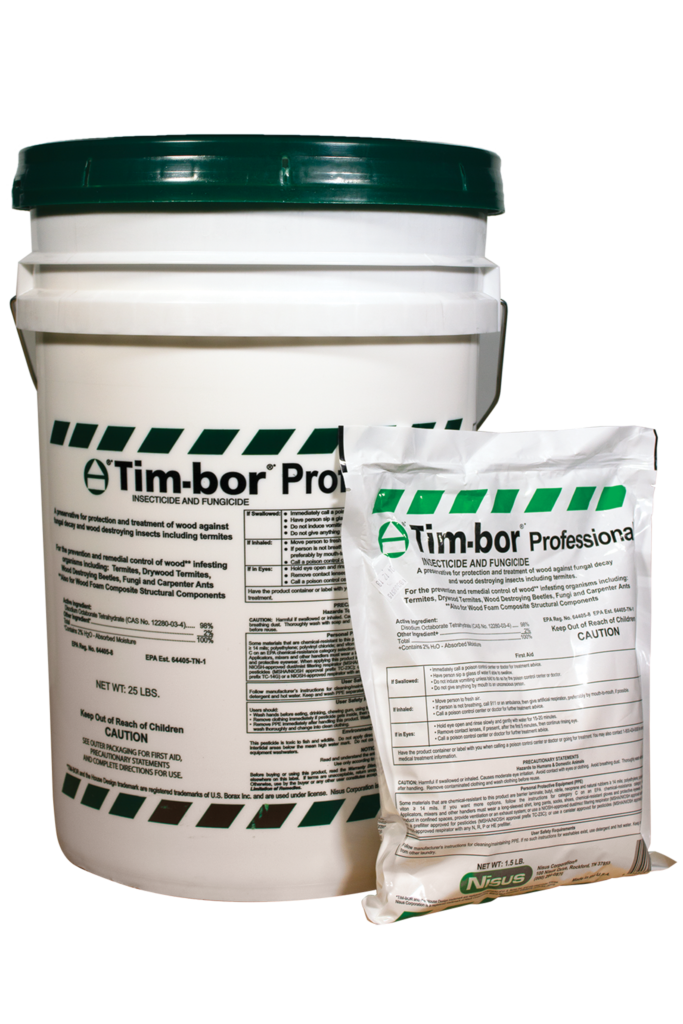
They also applied a borate treatment to give the wood some added protection.
It wasn’t a major renovation or an attempt to make the cabin look brand new. The goal was simply to stabilize it and give it a chance to stick around.
And there’s more to come.
A Family Heirloom With a New Home
The family has since spoken with the current landowners, who have agreed to let them relocate the original cabin. In exchange, Meadowlark plans to build the landowners a new cabin of the same size, allowing the original structure to come home.
The plan is to carefully transport it to the Meadowlark property in Libby, where the grandfather still lives just a few hundred yards from the facility. There, it will have a permanent place where the family can preserve it for years to come, hoping it will become more than just a family keepsake.
The cabin could eventually be included in tours of the Meadowlark facility, giving visitors a chance to see the very beginning of the company’s story firsthand.
There’s just one important decision left, what to do with the stain and finish. The family wants to preserve the cabin’s original appearance, including the natural gray patina that has developed over the decades, while still finding a way to protect the wood.
“We don’t want to completely change it. If we could keep it the way it looks right now, but preserve it, that would be the ideal.”
It’s a familiar challenge for anyone who owns an older log home: how do you protect something with so much character without taking away the very things that make it special?
The Story Isn’t Finished Yet
If you enjoy seeing how things are built, restored, and brought back to life, you’re going to want to follow this project.
Meadowlark has already shared a 35-minute video documenting the initial cabin work on its YouTube channel, with another version available on the family’s Amish Meadows YouTube channel.
And this isn’t the last you’ll see of it. The family plans to document the relocation process as well, which is expected to happen next spring.
There’s also a fun family connection behind those YouTube channels. The founder’s son still creates plenty of content, particularly around log home staining and projects, sharing his hands-on experience with viewers. His Amish Meadows channel has been around for more than a decade and has built an audience of approximately 120,000 subscribers.
When it comes to sharing knowledge, the family clearly hasn’t lost its enthusiasm.
The next generation is continuing to build on what came before, and that includes investing in education.
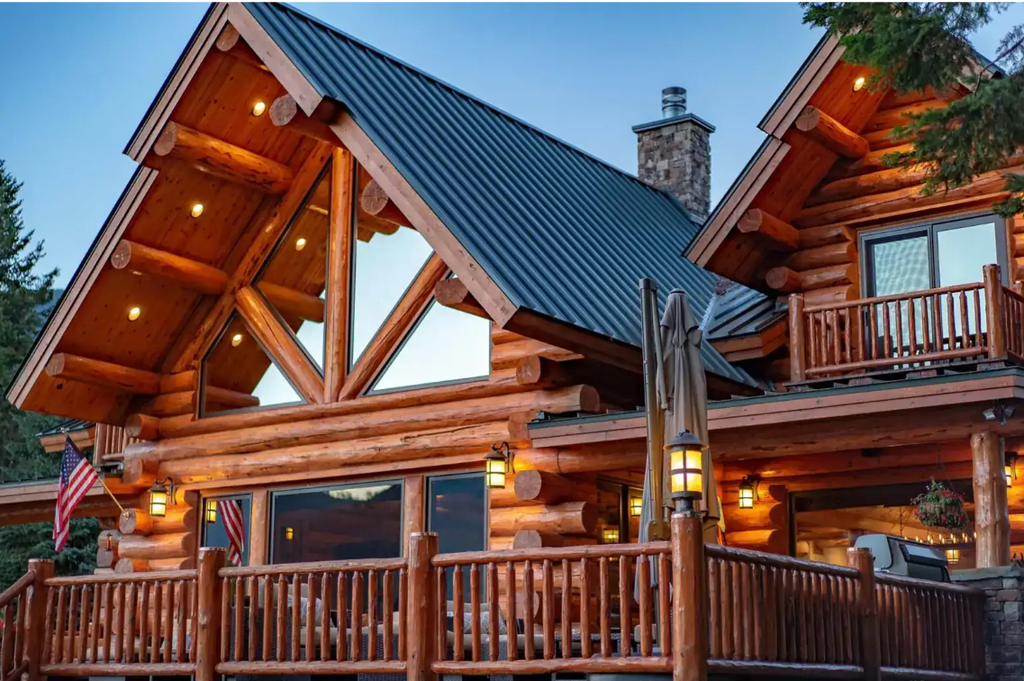
We’re proud to have Meadowlark Log Homes as one of our preferred manufacturing partners and love seeing a family take such care in preserving the history behind what they’ve built.
Because sometimes the most meaningful part of a company’s story isn’t the building, the equipment, or even the number of homes it has shipped.
Sometimes it’s a little cabin in the woods, built by two brothers who were just looking for something fun to do on the weekend. And still bringing the family together more than 50 years later.

Ready to stain? Don’t guess! Sample. Testing stain colors on your actual logs before committing ensures that you get the exact look you want and helps prevent “oops” moments later. Snag your free samples here.